
Product introduction
ZTT186(ZTT6517)
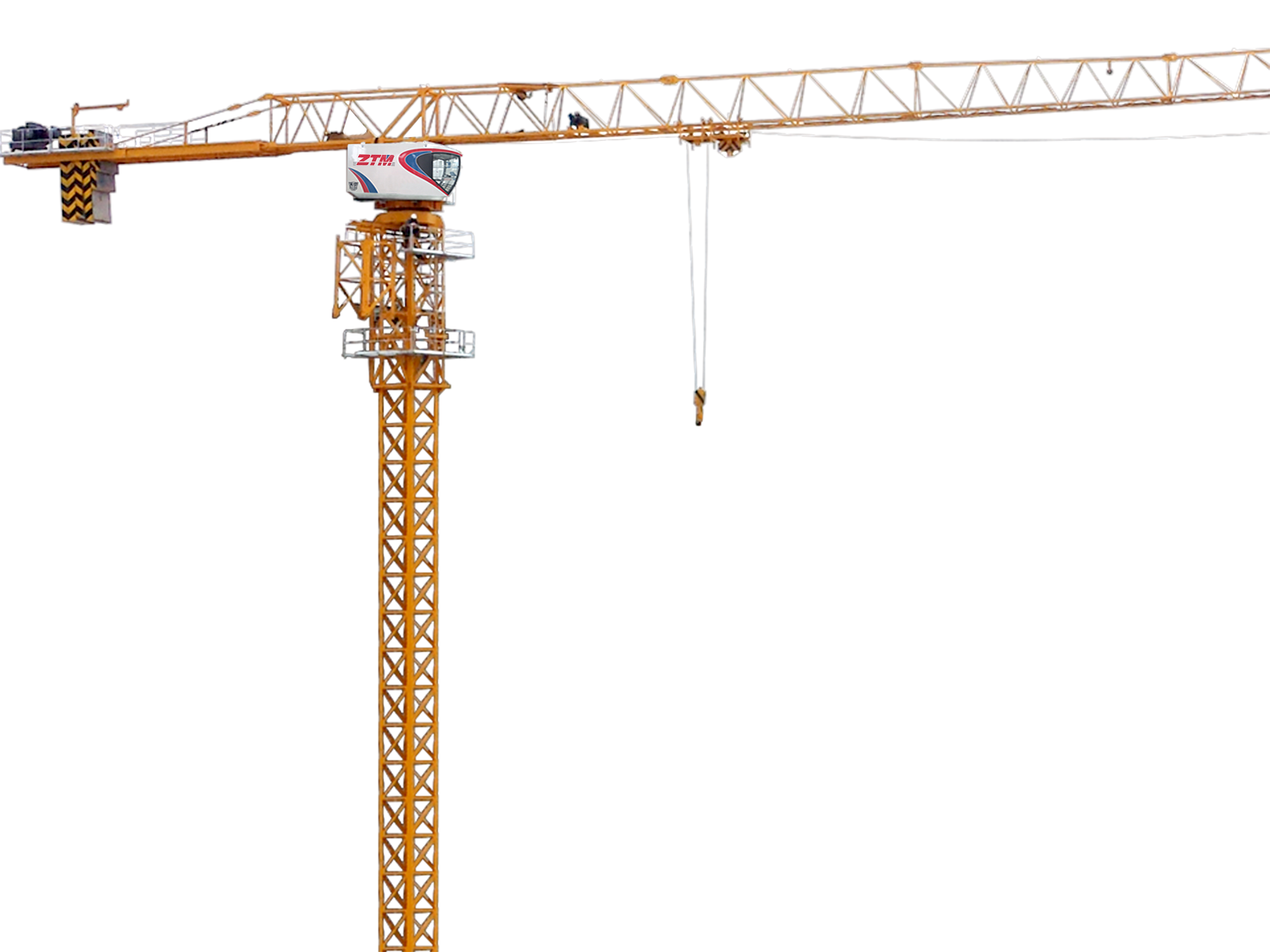
Enhance your construction efficiency with this advanced new topless tower crane, engineered to provide exceptional lifting capabilities with the practical advantages of topless design for unobstructed operation. The ZTT186 (ZTT6517) model delivers a substantial 10-ton maximum load capacity with 1.7-ton tip load capacity, featuring a 65-meter jib radius and 60-meter independent height that provides extensive coverage across construction sites. This robust new topless tower crane utilizes standardized mast sections including L68A1, L68B1, and L68B2 spliced configurations along with 1.8×1.8×2.8-meter fixed sections that enable flexible height adaptation as construction progresses upward. Construction managers appreciate the topless design that eliminates interference from upper structures while providing greater flexibility in crane placement and operation on congested job sites.
The crane's engineering focuses on both power and operational practicality. The substantial load capacity combined with the extended jib reach allows for efficient material handling across large work areas, while the topless configuration provides clear lines of sight for operators and reduced interference with other site equipment. This reliable new topless tower crane offers intelligent control systems that enhance precision during lifting operations while maintaining safety standards through advanced monitoring technology. The combination of high load capacity, extensive reach, and practical topless design makes this equipment particularly valuable for high-rise construction, industrial complexes, and large infrastructure projects where both lifting power and operational flexibility are essential for project timeline adherence and worksite efficiency.
Hoists are essential equipment in high-rise construction projects, providing a reliable and efficient means of lifting materials, tools, and personnel to elevated work areas. As buildings grow taller, traditional manual handling becomes impractical and unsafe, making mechanical hoists indispensable for modern urban construction. These systems are designed to handle heavy loads, reduce labor intensity, and maintain a continuous workflow, ensuring that construction schedules are met efficiently.
A primary advantage of hoists in high-rise construction is their ability to transport heavy and bulky materials safely to significant heights. Construction materials such as steel beams, concrete, scaffolding components, and prefabricated modules can be lifted quickly and securely. Modern hoists feature strong motors, durable cables, and reinforced platforms, ensuring stability and safety during operation. This capability reduces the need for manual lifting and minimizes the risk of accidents, protecting workers and improving site safety.
Hoists for high-rise buildings are available in a variety of configurations to meet different project requirements. Construction hoists can be permanent or temporary, with options for passenger lifts, material-only lifts, or combined lifts. Some hoists are designed to climb with the building, allowing continuous operation as floors are added, while others are fixed and used for specific sections of a project. Modern hoists often include advanced control systems that regulate speed, monitor load weight, and ensure smooth operation, providing both precision and safety.
Safety is a critical aspect of hoist design and operation. High-quality hoists include emergency brakes, overload protection, safety gates, and fail-safe mechanisms to prevent accidents. Regular inspection and maintenance are essential to ensure operational reliability, particularly in high-rise environments where failures can have severe consequences. Operator training and adherence to safety standards are equally important to ensure safe and efficient use.
In addition to lifting performance, hoists enhance construction efficiency. They reduce manual handling, speed up material delivery to upper floors, and help maintain a steady workflow. By providing reliable vertical transportation, hoists allow workers to focus on construction tasks rather than moving materials, increasing productivity and reducing fatigue. Advanced hoist systems can be integrated with project management and scheduling software to optimize lifting operations and coordinate deliveries, further improving project efficiency.
In summary, hoists are indispensable in high-rise construction, offering safe, efficient, and reliable vertical material and personnel transportation. By combining strong lifting capabilities, safety features, and operational efficiency, hoists support modern construction projects in achieving higher productivity, safer work conditions, and timely project completion. Their role is essential for the success of high-rise buildings in urban environments.
Company Video
We welcome customers at home and abroad to visit our factory to reach long-term cooperation and create success together.

FAQ
What is the main use of a tower crane?
Tower cranes are mainly used in high-rise construction, especially when there is a need to vertically lift heavy loads or large components. They provide an efficient lifting solution on construction sites.
What is the working principle of a tower crane?
A tower crane operates with a rotating mast and jib. It lifts heavy objects using a hook powered by an electric motor, with steel cables that carry the load during lifting operations.
What are the main safety measures for tower cranes?
Safety measures for tower cranes include regular inspections and maintenance, operator training, overload prevention systems, and the installation of limit devices.
What is the lifting capacity of a tower crane?
The lifting capacity of a tower crane depends on the model and configuration, typically ranging from several tons to several hundred tons.
Are tower cranes suitable for all construction projects?
Tower cranes are primarily used for high-rise buildings and large-scale construction projects. They may not be suitable for low-rise buildings or smaller projects.
What is the typical rental cost for a tower crane?
The rental cost of a tower crane varies depending on the crane's specifications, rental duration, and location, typically ranging from several thousand to tens of thousands of RMB.
ZTT186(ZTT6517)
Product Model:
- Commodity name: ZTT186(ZTT6517)
- Max. hoisting capacity: 10
- Max. hoisting capacity at jib end: 1.7
- Max. boom length: 65
- Max. free standing height: 60
- Max. jib Length: 65
- Tip Load: 1.7
- Independent height (m): 60
- Standard section configuration: L68A1、L68B1、L68B2
Categories:
Keywords:

RELATED PRODUCTS

Online Message
Ready to grow your business? Your next great business opportunity starts with an inquiry.